
Computer Vision: How Machines "See" and What It Means for Your Business
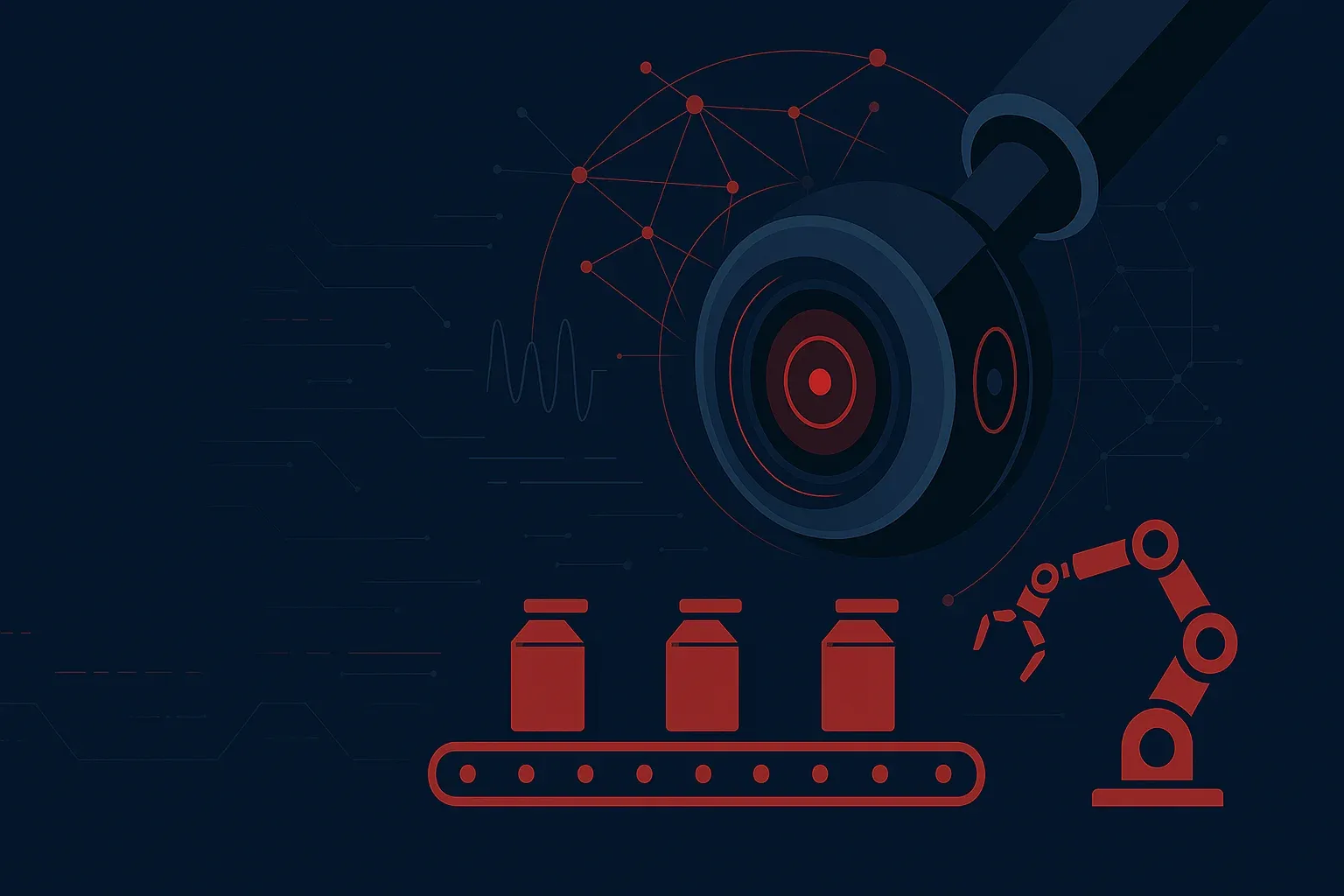
When we talk about Computer Vision, we mean exactly this: giving a digital system the ability to observe the visual world, understand it, and act accordingly. It sounds like science fiction, but it's technology that is already working in companies today. And not just in the very large ones.
How Computer Vision Really Works
Understanding how it works at its core helps us better see where this technology can make a difference.
Computer vision is based on algorithms that analyze images, but not in the human sense of the word. They "read" them by breaking them down into data: pixels, shapes, colors, contours. From there, they look for patterns, anomalies, and recurring movements. It's as if they have a visual checklist, and as soon as something doesn't add up, they flag it.
Think of a system that can see a slightly misplaced label on a bottle. Or a micro-fracture in a metal part. Small things, but they make all the difference.
The beauty of it is that, thanks to machine learning, these systems improve over time. The more they "see," the more they learn. Just like us, but with perfect memory and zero distractions.
The technical side is interesting, but it's only the foundation. The true value is seen when we bring all this into the reality of a business. And at that point, the applications multiply.
When Computer Vision Improves Quality
Let's start with one of the most immediate uses: manufacturing.
A computer vision system, combined with an industrial camera, can inspect every product that comes off a line. It detects defects, waste, and imperfections. And it does so without getting tired, without missing a beat, 24 hours a day.
What does this mean for your business? Fewer errors, fewer returns, more consistent quality, and a stronger reputation. And above all: less manual intervention and more time to do other things.
For our part, at Red Lynx, we have already implemented such systems for manufacturing companies looking to automate quality inspection.
Security, But With Digital Eyes
Another key area: real-time monitoring.
In industrial settings, infrastructure, or sensitive areas, computer vision can detect anomalies, unexpected movements, and unauthorized access. And trigger the alarm at just the right time.
It's like having an extra pair of eyes. Eyes that never get distracted and see even what we miss.
A practical example? The OK-ROAD project. At Red Lynx, we created a system that detects potholes and damage on roads. It helps prevent costly repairs and reduces risks.
And in Sports Facilities? It Works There Too
We couldn't fail to mention Green Illness Detection. A Red Lynx project that uses computer vision to monitor, via drone, the health of the turf on golf courses and green areas. It identifies plant diseases before they are visible to the naked eye.
The result? Fewer treatments, less waste, lower costs. Better care. More precision. And a lower environmental impact.
What We Do at Red Lynx, With Our Eyes Wide Open
What we do at Red Lynx is develop custom computer vision algorithms, tailor-made for each company.
Systems that automate currently manual visual processes, making them faster, safer, and more reliable. From production controls to security, all the way to agriculture and retail.
Every project starts with a concrete question: where can we help the company see better?
We have already worked with businesses across various sectors, and we often start with a demo or a pilot project. Small, measurable, but immediately useful.
Start Seeing With New Eyes
Computer vision isn't just fascinating technology. It's a practical tool to make business processes smarter.
It observes, analyzes, reports, and improves. And it does so in real-time, with a consistency that no human eye can match.
And now that you know what it's all about, it might be worth asking yourself: in which part of your business could computer vision come into play?
We are here to talk about it, without the technical jargon, with examples and solutions that simply work.
Have a project in mind?
We're ready to listen to your ideas and turn them into innovative AI solutions. Contact us for a free consultation.
Contact us now