
Ethics in Artificial Intelligence: What Companies Need to Know
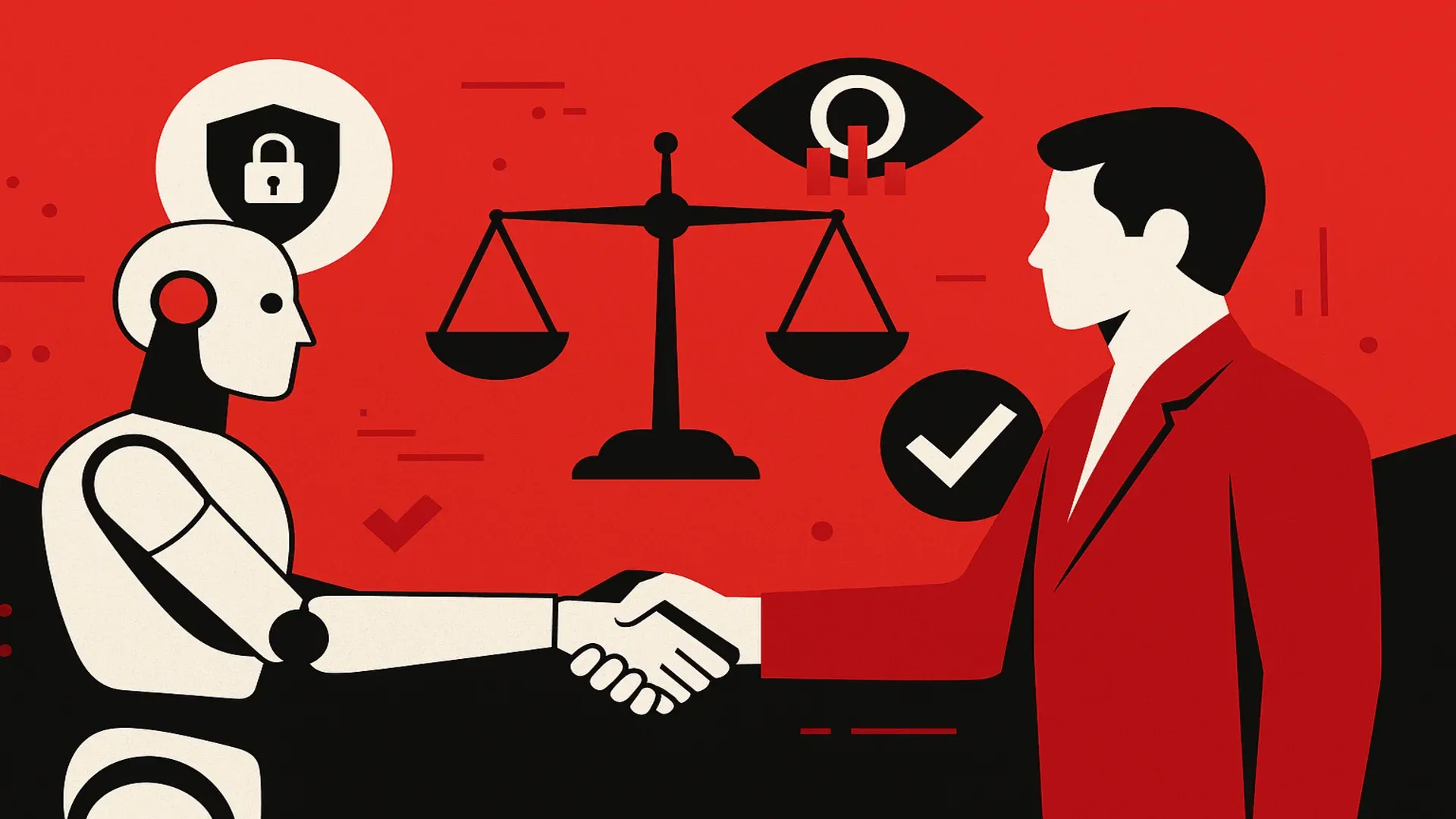
When we talk about Artificial Intelligence in business, we tend to immediately think of technology, data, and efficiency. But we rarely start with an equally crucial question:
"Is this solution also ethical?"
Ethics in AI is not a luxury for big tech, but a concrete responsibility for anyone who wants to innovate with awareness. Implementing an AI system means making decisions that impact people, customers, workers, and entire organizations. And every decision requires attention.
Let's look together at what it means to adopt AI ethically and what aspects a company cannot afford to overlook.
Privacy and Data Management
AI feeds on data. And often, this data is personal, sensitive, or strategic. In Europe, regulations like the GDPR impose strict rules: consent, clear purposes, data minimization. But beyond the law, it's a matter of trust.
If you implement a computer vision solution in a retail store, for example, your customers need to know they are being recorded. If you analyze browsing habits or purchasing preferences, it is your job to protect this data. Red Lynx has always adopted a privacy-by-design approach: anonymization, encryption, controlled access. And if specific privacy notices are needed, we help you prepare them.
Bias and Algorithmic Discrimination
Algorithms are not neutral. If historical data contains biases, AI risks amplifying them. This can happen in HR (algorithms that penalize a gender), finance (credit scoring that discriminates by geographic area), or even in maintenance (priority given to machinery based on flawed logic).
Red Lynx works on balanced datasets, performs robustness tests, and introduces ethical checks into projects. Each model is tested across different scenarios to verify its fairness. Because an effective algorithm, if not fair, is not useful.
Transparency and Explainability
"Why did the AI decide this?"
It is a question that every customer or manager should be able to ask. And find an answer to.
Not all AIs are black boxes. Explainable AI models exist that provide insights into the logic by which they reach a decision. In an industrial setting, knowing why an anomaly was flagged makes the difference between trusting the technology or not.
Red Lynx integrates interpretability tools into its projects and trains teams to read them. This way, companies don't just undergo AI, they govern it.
Responsibility and Supervision
An algorithm makes a mistake. Who is accountable? It is not enough to say "it's the AI's fault." The company adopting it is responsible for the effects.
Roles need to be defined: who monitors performance, who intervenes in case of error, what thresholds trigger human intervention. Red Lynx structures projects with clear governance: dashboards, alerts, fallbacks. Because AI works, but it is not infallible.
Regulation and Emerging Standards
Europe is moving. With the AI Act and OECD guidelines, companies will soon have to prove they are adopting AI in a compliant manner. Waiting is no longer a good strategy.
Even today, it pays to design following these principles: transparency, fairness, security, accountability. Red Lynx includes these aspects right from the assessment phase and proposes internal policies that anticipate future regulations.
Social and Cultural Impact
Implementing AI doesn't just mean increasing efficiency. It also means transforming work. Doing so ethically means preparing people for change.
Training, reskilling, internal communication: all of this is part of responsible adoption. At Red Lynx, we also guide teams so that AI is not experienced as a threat, but as an allied tool.
Ethics as a Competitive Advantage
Adopting ethics is not just an obligation; it is a strategic opportunity. An AI designed with respect for fundamental values builds trust, improves brand reputation, and opens up new market possibilities.
Increasingly, stakeholders, customers, investors, and regulators are demanding transparency and accountability. Being ahead of the curve on these aspects means positioning yourself as a reliable and forward-looking company. This is why Red Lynx also works on ethical audit frameworks and supports companies in creating internal policies, without bogging down processes.
Ethics, therefore, is not an obstacle to innovation, but an accelerator. And often, it is precisely transparency that makes the difference between a project that convinces and one that remains on standby.
Ethics is Not a Brake, It is a Trust Multiplier
Innovating with AI is a strategic choice. Doing so ethically means protecting customers, employees, and reputation. At Red Lynx, we do not consider ethics a constraint, but a value that increases the effectiveness and sustainability of projects.
Because an AI designed with responsibility is more solid, more respected, and more enduring.
Want to Learn More About Integrating Ethics into Your AI Strategy?
Contact us: together we will analyze your needs, evaluate the risks and opportunities of your specific context, and define a roadmap that combines innovation and responsibility. Every organization has unique characteristics: this is why our ethical pathways are not standardized, but custom-built. For us, ethics is not a separate option, but a fundamental ingredient of the project itself.
Have a project in mind?
We're ready to listen to your ideas and turn them into innovative AI solutions. Contact us for a free consultation.
Contact us now