
The Project
MaChAwAI is an innovative project that combines artificial intelligence and Material Testing for additive manufacturing, developed in collaboration with MaCh3D and 3DPR.
The goal is to reinvent material analysis in 3D printing, making it simpler, faster and cheaper to verify the physical characteristics of materials.
The project was supported by the European Horizon 2020 program through the open call KYKLOS 4.0 #2 (KYKLOS 4.0 project, Grant Agreement n. 872570).
The Challenges in Material Testing
High Costs
Traditional Material Testing machinery is expensive, bulky, and often inaccessible to SMEs.
Significant Complexity
Only specialized operators can correctly perform the tests, requiring highly qualified personnel.
Long Time
Tests can be lengthy to prepare and conduct, slowing development and production processes.
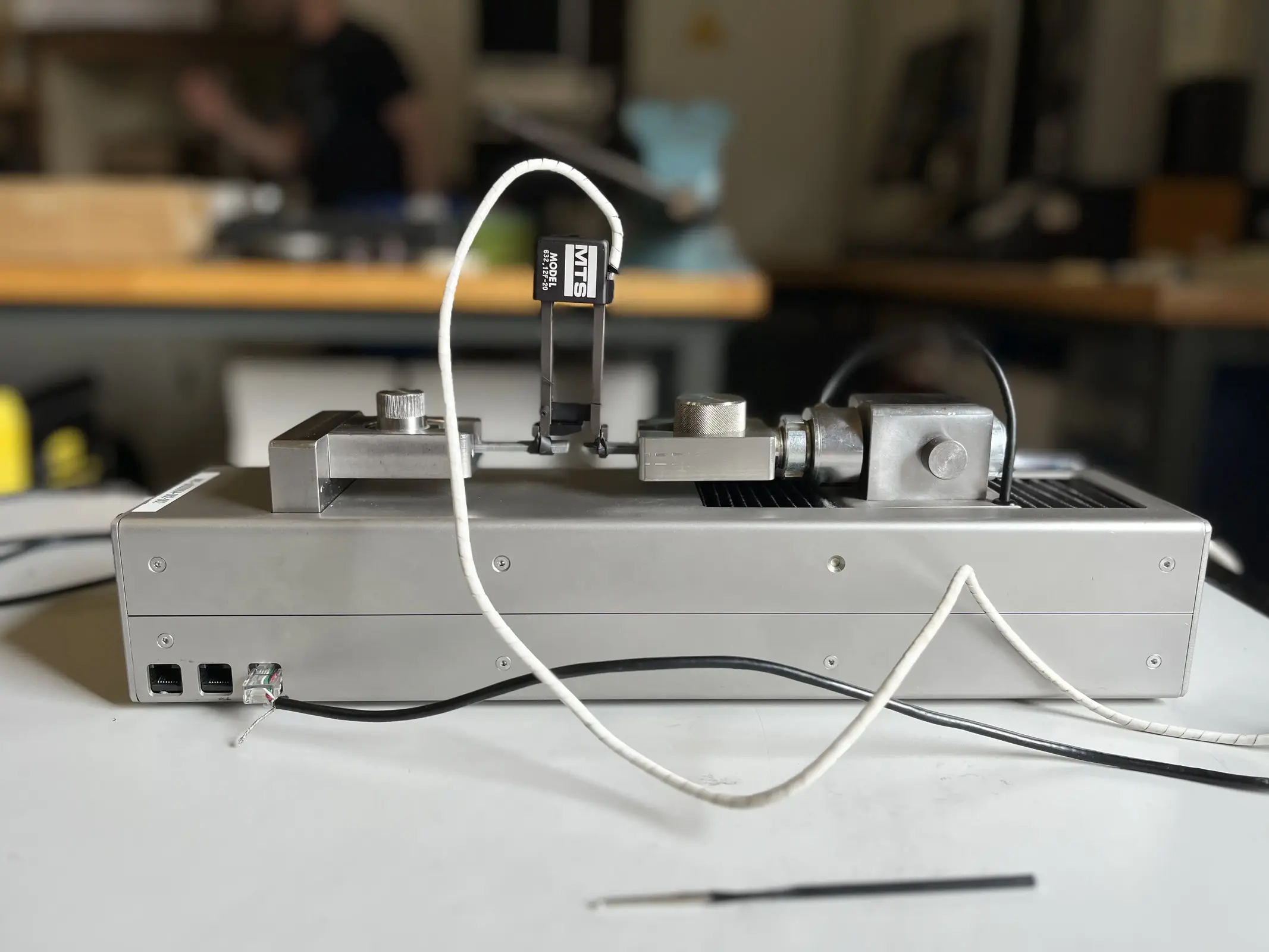
The MaCh3D device, while reducing certain cost and complexity aspects compared to standards, still needs an additional tool to obtain reliable data — such as an extensometer (or "distance meter") — with consequent increases in costs and difficulty of use.
Project Goal
"Build a system that delivers precise measurements from the MaCh3D device, avoiding the use of additional instrumentation."
Faster
No need to position the extensometer.
Simpler
By eliminating additional tools, the procedure becomes streamlined.
Cheaper
Costs related to extensometers or other equipment are saved.
Equally Accurate
Even though we remove a device traditionally considered essential, high accuracy is maintained.
Our Solution
We developed an innovative Deep Learning model that makes MaCh3D measurements as accurate as those obtained with an extensometer.
Device that needs an extensometer to obtain reliable data
Deep Learning model that analyzes and corrects raw data
Data with accuracy equivalent to that obtained with the extensometer
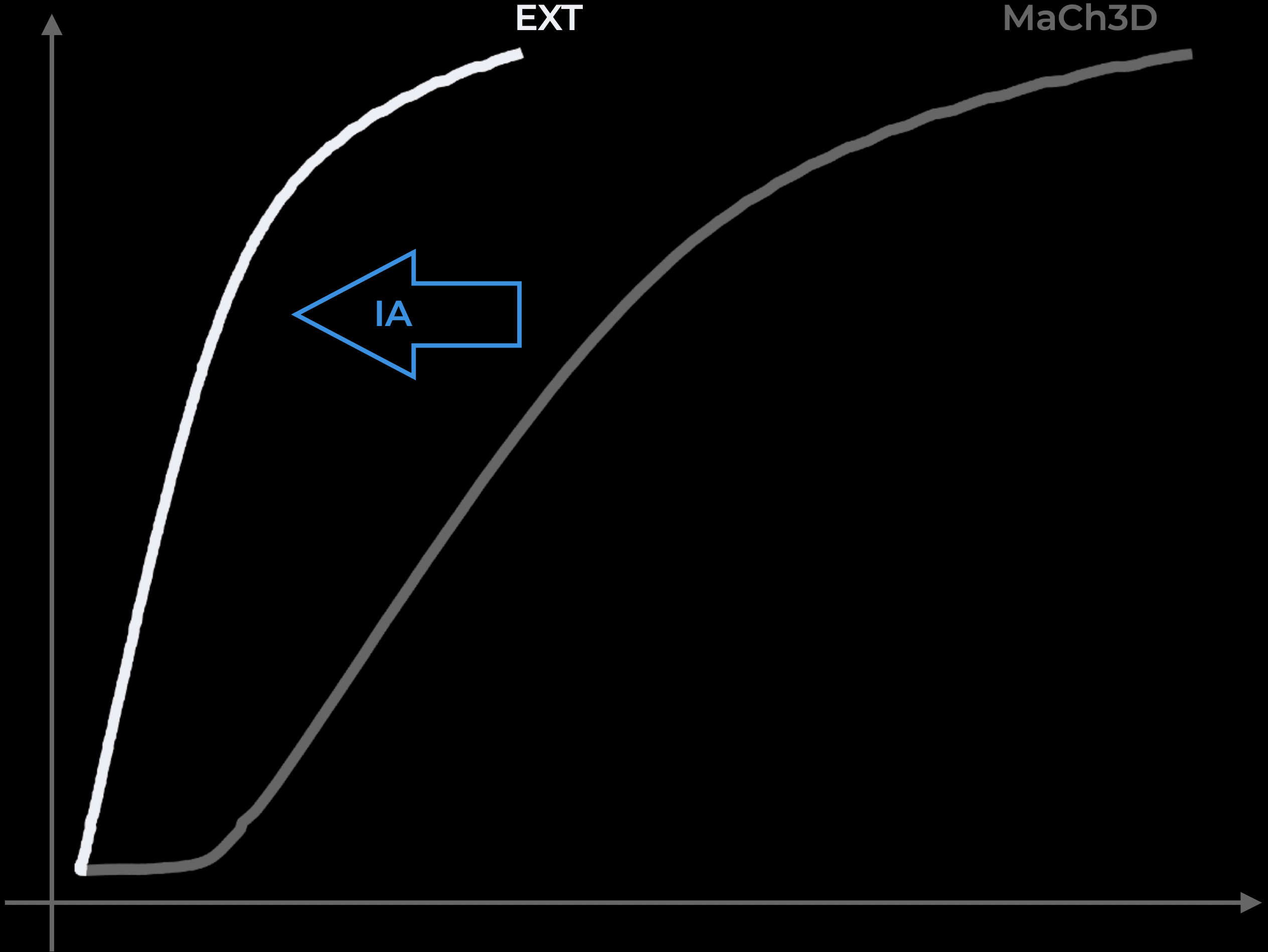
The neural network acts as a "transformer" of the data generated by MaCh3D, returning a curve that's much closer to reality.

Implementation Phases
1. Preliminary Study
Analysis of scientific literature and selection of existing public datasets on Material Testing, to build a solid background for deep learning techniques.
2. Data Collection
Leveraging the many instrumented tests by MaCh3D and 3DPR on various materials and printing technologies to build a custom dataset representative of multiple scenarios.
3. Ideation & Development
Based on the collected data, we conceived and developed dozens of Deep Learning models, experimenting with different architectures to find the ideal tailored solution.
4. Validation
The best model was cross-validated by the engineering teams of MaCh3D and 3DPR, using data never "seen" by the model to evaluate its performance on new scenarios.
5. Iteration & Optimization
With new measurements and printing samples, the AI continued to learn and further reduce measurement error, creating a virtuous loop: the more tests run, the more robust and accurate the models become.
Achieved Results
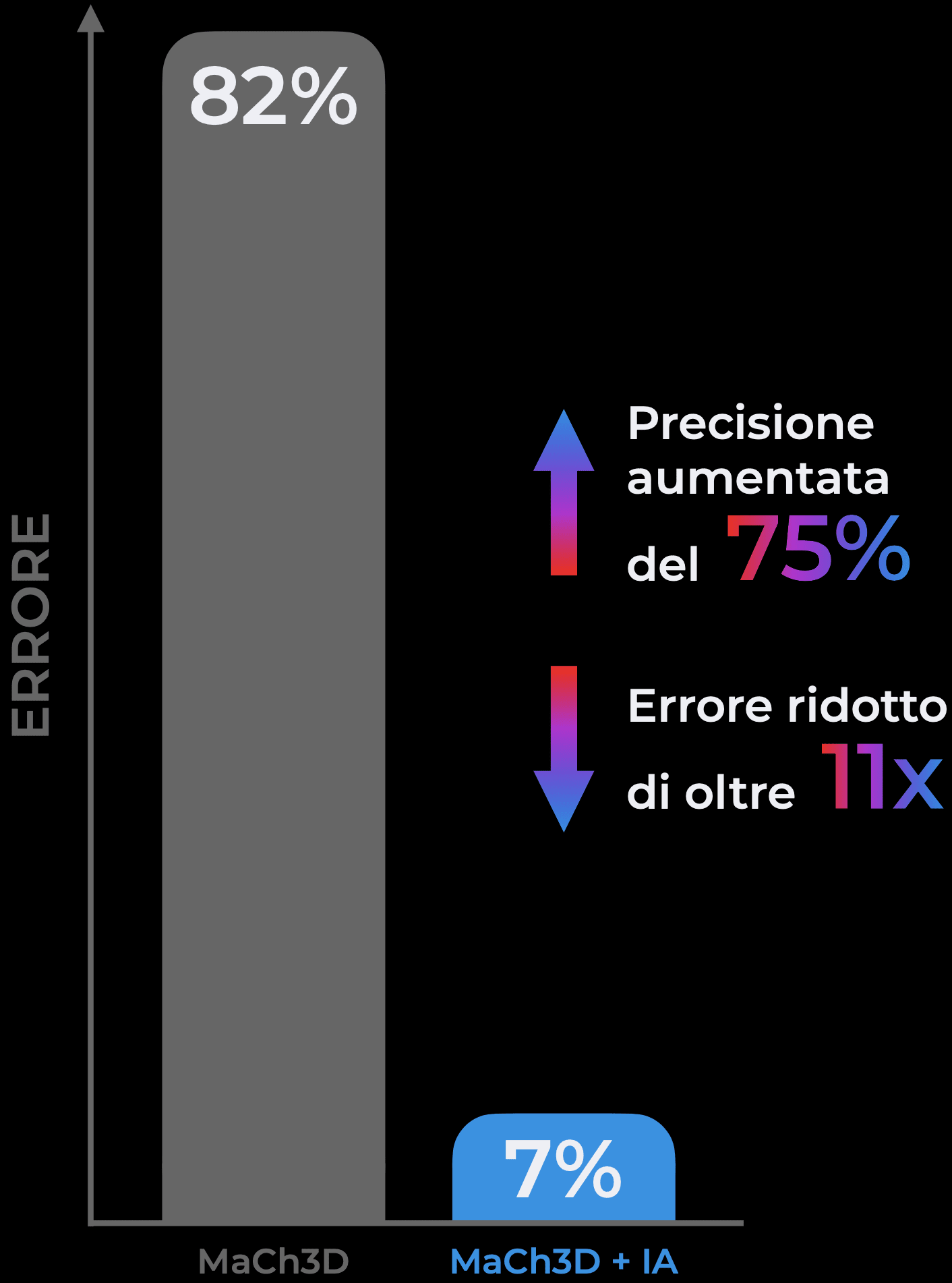
By integrating our AI, the MaCh3D device's accuracy increased by 75%, corresponding to a more than 11x error reduction.
The AI-corrected curves are extremely similar to those produced using an extensometer — at some points the two lines are difficult to distinguish.
Overall error dropped from 82% to about 7%, showing a remarkable qualitative improvement in measurements.
Solution Comparison
Traditional Devices
- Expensive and bulky
- Require specialized personnel
- Slow and complex procedure
- High accuracy
MaCh3D (without AI)
- Affordable and compact
- Easy to use
- Fast procedure
- Low accuracy
MaCh3D + AI
- Affordable and compact
- Easy to use
- Fast procedure
- High accuracy
The working prototype demonstrated the ability to keep the average error below 7%.
Other projects
Discover how we've helped other companies solve complex problems and turn their data into a competitive advantage.

Green Illness Detection
Reinventing turfgrass monitoring

OK-ROAD
Smart road monitoring

Manufacturing AI Assistant
Next-generation technical support powered by AI
Trend Anomaly Detection
Advanced microbiological exam analysis